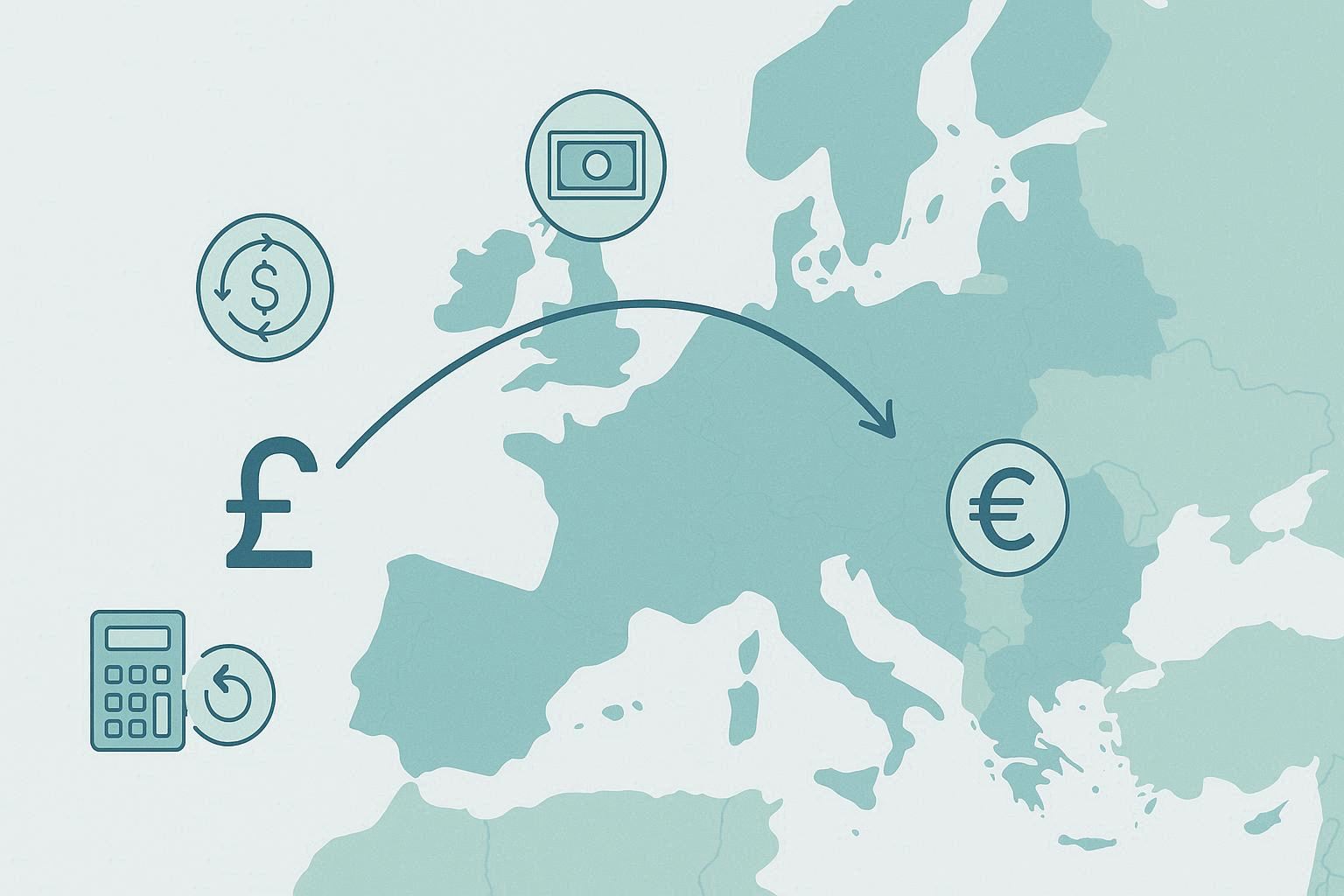
Moving money across borders has become a routine part of modern life. Whether supporting family abroad, paying for education, or managing international freelance income, individuals increasingly need reliable ways to send funds between countries. Transfers between the UK and European destinations illustrate how financial infrastructure, regulation, and technology intersect in everyday transactions.
At its core, an international money transfer involves converting one currency into another and routing funds through regulated financial channels. While the concept is simple, the execution depends on several variables: exchange rates, settlement speed, intermediary banks, and local compliance requirements. Understanding these elements helps individuals make informed decisions rather than relying on assumptions or habits.
How International Transfers Work
When money is sent from the UK to another European country, the transaction usually follows a multi-step process. First, funds are debited from the sender’s account in pounds sterling. Next, currency conversion takes place, either before or during settlement. Finally, the converted amount is delivered to the recipient through a local banking or payout network.
Each step introduces potential friction. Exchange rates may differ from market averages, processing times can vary from minutes to several days, and fees may be applied separately rather than transparently. For this reason, many people now compare transfer methods instead of defaulting to traditional bank wires.
Speed, Cost, and Transparency
One of the most noticeable differences between transfer methods is speed. Older systems often rely on batch processing and correspondent banking relationships, which can delay delivery. Newer infrastructures aim to shorten this chain, allowing recipients to access funds more quickly.
Cost is another critical factor. Fees may be fixed, percentage-based, or embedded within exchange rates. Without clear breakdowns, senders may not realize the true cost of a transaction until after it is completed. Transparency in pricing and exchange rate application has therefore become an important benchmark for evaluating transfer options.
For readers looking to understand practical routes used today, an example of a commonly referenced transfer corridor can be found here:
https://koronapay.com/transfers/europe/en/landing/gb-ge/
Regulatory and Practical Considerations
Cross-border transfers are subject to financial regulations in both the sending and receiving countries. Identity verification, transaction monitoring, and reporting obligations are designed to prevent fraud and illicit activity. While these safeguards are essential, they also influence user experience by shaping limits, documentation requirements, and processing times.
Additionally, local banking infrastructure plays a role. Some countries offer instant domestic settlements, while others rely on slower clearing systems. Understanding these differences explains why two transfers of the same amount can arrive at very different speeds.
Making Informed Choices
Rather than searching for a single “best” way to send money internationally, it is more useful to understand how different systems operate. Frequency of transfers, urgency, and sensitivity to exchange rates all influence which option is most suitable in a given situation.
As cross-border movement of people and income continues to grow, financial literacy around international transfers becomes increasingly valuable. Knowing how money moves, what affects its cost, and why timing varies empowers individuals to navigate international payments with greater confidence.